-3.png)
The Lionesses at 500 games: how they got here

England’s 500th game offers a chance to celebrate the Lionesses not just for where they are now, but for the moments, big and small, that carried them here.
That story stretches back to 1972, when England played their first recognised international against Scotland. It came just a year after an unofficial side had drawn a crowd of around 90,000 at the Azteca Stadium in Mexico, a reminder that interest in the women’s game already existed even if formal structures were still catching up. By the time the Women’s Football Association organised an official England team later that year, the setting was far more modest. Around 400 people were at Ravenscraig Stadium in Greenock as England came from behind to beat Scotland 3–2, a competitive start that gave little indication of how significant the moment would become in hindsight.

Progress came in stages rather than all at once. By 1984, England were competing in the first official European Competition for Women’s Football, a four-team tournament played across several countries. They reached the final after beating Denmark 3–1 on aggregate with the first leg in Crewe watched by around 1000 people. The final itself reflected the state of the game at the time. England lost the first leg 1–0 to Sweden in Gothenburg but responded with a 1–0 win at Kenilworth Road, taking the tie to penalties, where they were ultimately beaten after it finished 1–1 on aggregate. There was no television coverage, and despite the significance of the occasion, it passed largely without wider attention.

More than a decade later, that gradual progress carried onto the global stage. England qualified for the 1995 World Cup in Sweden, their first appearance at the tournament and reached the quarter-finals, where they were beaten by Germany. It was a clear step forward in competitive terms and showed how far the team had developed since those early years. At the same time, that progress was not fully reflected off the pitch. Recognition and coverage remained limited and for a long period the Lionesses existed in that space between improvement and visibility, performing at a higher level without it translating into wider attention.

By the late 2000s, that began to shift. England’s run to the European Championship final in 2009 brought a level of attention that had been missing before, even if the tournament as a whole still felt relatively small with a total attendance of around 134000 across all matches. However on the pitch, there were signs of real progress. England looked closer to the top level than they had before, even if the 6–2 defeat to Germany in the final made it clear there was still a gap to close. This is also where we saw the rise of ceritifed ballers such as Jill Scott, Karen Carney, Anita Asante, Alex Scott, Eni Alouko, Fara Williams and Kelly Smith.

By 2015, the shift was harder to ignore. England’s third-place finish at the World Cup, sealed with a 1–0 win over Germany in the play-off, brought a new level of attention and felt like a genuine step forward rather than just promise. Certified icons such as Lucy Bronze were increasingly recognised as among the best in the game and the team itself was no longer operating on the edges of the conversation. For the first time in a while, England weren’t just part of the tournament, they were one of the sides people were actually watching.
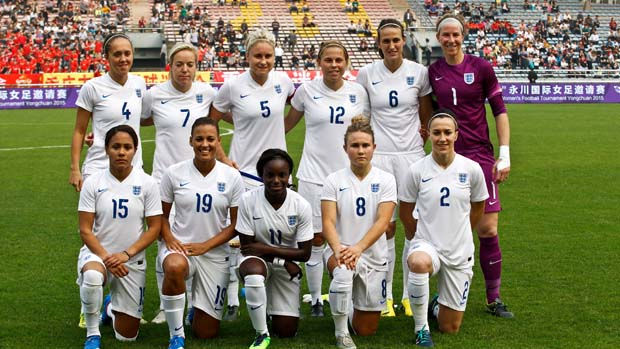
Everything that had been building found its clearest expression at Euro 2022. In front of a record crowd of 87192 at Wembley, England defeated Germany 2–1 after extra time with Chloe Kelly scoring the iconic decisive goal. Across the tournament, more than 570,000 fans attended matches, a scale that reflected how far the game had moved in a relatively short space of time. That success carried into the following year with England reaching the World Cup final in 2023 under Sarina Wiegman, maintaining a level of performance that turned earlier breakthroughs into something more consistent. By 2025, that progress became expectation. England retained their European title, beating Spain on penalties in the final, a match watched by a peak UK television audience of 12.2 million on the BBC underlining how far the reach of the game had grown.

Set against all of that, the 500th game doesn’t come down to one standout moment. It feels more like a marker of everything that’s been built over time, from players fighting just to be on the pitch to a team now expected to win on it. It’s less about a single achievement and more about what those moments have opened up. The Lionesses aren’t just winning games, they’ve changed how women’s football is seen, who gets to be part of it and who grows up believing there’s a place for them in it.


Comments