-3.png)
England's Collapse Against Spain: The Tactical Downfall Behind the Lionesses' Defeat

England's heavy defeat to Spain was not simply a bad night at the office; it was a tactical lesson delivered by the world's most technically sophisticated side and a match that exposed growing concerns within the Lionesses' midfield structure.
Spain's 4-0 victory in Mallorca was England's heaviest defeat in 17 years and therefore subsequently ended their hopes of automatic qualification for the 2027 Women's World Cup.
More importantly, it exposed a midfield imbalance that Spain ruthlessly exploited.
Spain's midfield trio of Alexia Putellas, Patri Guijarro, and Mariona Caldentey dictated the rhythm of the match, with their positional rotations constantly creating numerical superiority between England's lines and ultimately forced the Lionesses into a reactive rather than proactive shape.
England's midfield often found itself caught between two decisions: either Step forward to press Spain's playmakers or remain compact and protect the defence.
However, they did neither effectively.
Whenever England attempted to engage, Spain simply played around the pressure. When the Lionesses dropped deeper, the World Champions advanced uncontested into dangerous zones. The result was a midfield unit that spent most of the game chasing shadows rather than controlling territory.
Spain's opener perfectly illustrated this dynamic, with Sarina Wiegman’s side repeatedly unable to close passing lanes in central areas before Guijarro eventually punished them with a uncontested solo strike.

For years, Keira Walsh has been the Lionesses’ rock in the midfield, a consistent, reliable figure who would arguably be the first name on the team sheet. Against Sonia Bermudez’s side, she became a target.
Spain understood that disrupting Walsh would disrupt England's entire build-up structure. Every time she received possession, the captain was immediately surrounded by multiple Spanish midfielders, nullifying passing angles and forcing them to go backwards.
Support around Walsh was also inconsistent. The distances between England's midfielders became too large, leaving her responsible for progressing possession alone. Instead of acting as a deep-lying playmaker, the number four spent much of the game under pressure and unable to dictate tempo; the key to unlocking a fully-flowing Lionesses’ side.
The consequence was severe. England struggled to connect defence to attack as the forwards became detached from the rest of the team, often receiving possession only after long clearances or hopeful long balls in transitions.
Essentially, Bermudez’s side’s press prevented the European Champions from playing through midfield, and therefore by-passing a key part to Wiegman’s set-up, and exposed a lack of dynamism in central areas.
Another crucial part to the Lionesses’ game is Georgia Stanway.

The former Bayern Munich star is at her best when driving forward aggressively, breaking lines with carries and attacking second balls. Against the World Cup holders, she spent most of the match retreating.
Rather than supporting attacks, Stanway was repeatedly forced into defensive recovery runs as Spain overloaded central zones. The game's tempo left little opportunity for her trademark box-to-box influence and therefore were not able to benefit in the final third.
Spain's fluid movement created constant uncertainty. Whenever Stanway stepped out to press, spaces opened behind her. Whenever she stayed compact, Spain found time to circulate possession. The result was a midfielder trapped in defensive decision-making rather than one imposing herself on the game.
England's midfield therefore lacked progression, penetration and physical dominance simultaneously.
Perhaps the most impressive aspect of Spain's performance was their use of rotations between midfield and wide areas.
Spain frequently moved players inside from the wings whilst midfielders drifted into the spaces as England's defensive structure struggled to pass runners on effectively.

A similar issue had been identified in previous meetings between the European and World Champions.
Spain's ability to create overloads through intelligent positioning forces England's midfielders and full backs into difficult choices, often creating free players between the lines.
Against the Spanish side, the Lionesses’ midfield was constantly dragged out of shape with every adjustment creating another gap. Spain were able to progress possession through combinations and overloads before attacking a stretched defensive block.
One of the defining images of the match was England's forwards defending near their own penalty area.
That wasn't because the attackers were lazy; it was because Bermudez’s side’s counter-pressing was relentless.
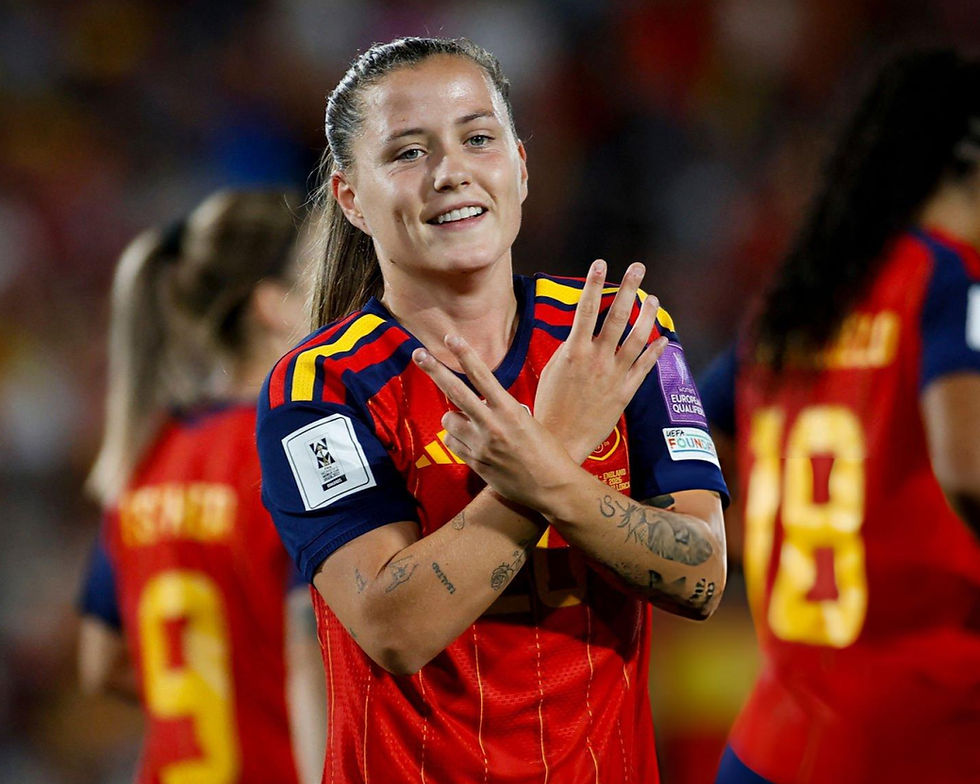
Whenever the Lionesses regained possession, Spain immediately collapsed around the ball. Without midfield outlets available, England were forced into rushed clearances, direct passes, and hitting it long into unoccupied areas.
As a result, England couldn’t sustain attacks, establish possession, or move Spain's midfield around.
The Lionesses completed very few meaningful sequences through the centre of the pitch. Instead, possession became fragmented and transitional, exactly the type of game Spain wanted.
The front three became isolated spectators rather than attacking threats.
This defeat also revived a wider debate around England's midfield development.
The Walsh-Stanway axis has delivered major tournament success, but international football evolves quickly. Spain's midfield profile now reflects a generation raised in possession-dominant systems at both club and international level.

England's midfield remains technically strong, but it increasingly appears vulnerable and too predictable against elite opponents capable of controlling possession and pressing aggressively.
Questions are emerging around whether the side need greater athleticism, more progressive passing options, or a structural adjustment that introduces another midfielder capable of receiving under pressure and progressing play.
Has Wiegman's over reliance on established combinations limited tactical evolution and made her side too predictable?
What Must Change?
The defeat, however, shouldn’t trigger panic. England remain one of the strongest teams in world football and have repeatedly shown resilience under Wiegman.
However, Spain exposed three problems that cannot be ignored:
1. England Need to Use Their Midfield Depth
The constant use of Stanway and Walsh can become too predictable and easy to read for their opposition and therefore ineffective.
2. England Need Greater Positional Flexibility
Spain's rotations created confusion throughout the match and therefore England need more fluid responses when opponents overload central areas.
3. England Need Better Press Resistance
Against the very best teams, technical security under pressure becomes essential. Spain repeatedly forced the visitors into rushed decisions because they lacked consistent passing options through midfield.

England didn’t lose 4-0 because Spain were simply more clinical; they lost because the World Champions controlled the game's most important area: midfield.
The Lionesses were unable to build attacks, unable to sustain possession and unable to prevent Spain from dictating tempo. Walsh was isolated, Stanway was reactive, and the entire midfield structure was stretched beyond its limits.
Perhaps the most concerning aspect of the defeat was not the quality of Spain's starting midfield, but the quality waiting on the bench.
As England chased the game and searched for solutions, Spain were able to introduce fresh world-class talent without sacrificing control.
The most obvious example was the arrival of Aitana Bonmatí, one of the best midfielders in world football and a player with extensive experience of winning the biggest club and international matches.
For most international sides, bringing on Bonmatí would represent a significant upgrade, and whilst it did, for Bermudez’s side, it was also simply another option in an already stacked midfield unit.

That contrast highlighted the growing disparity in depth between the two squads.
Whilst the World Cup holders could turn to established international stars from the bench, the Lionesses’ midfield alternatives were largely drawn from a younger generation still gaining experience at senior international level.
Players such as Lucia Kendall undoubtedly represent the future of the Lionesses, but asking inexperienced players to alter the momentum of a match against the reigning World Champions is an entirely different challenge.
As the game wore on, Spain's substitutions strengthened their control of possession but for England, their changes were more about chasing the game.
Throughout the match, Wiegman made four substitutions in an attempt to wrestle back control and find a way through Spain's dominance, yet none of those changes came in central midfield.
The most notable adjustment saw Beth Mead replace Ella Toone, with Alessia Russo subsequently dropping into the number 10 role, but the midfield pivot of Stanway and Walsh remained untouched.

The decision to leave Kendall, Jess Park, and newly crowned WSL champion Laura Blindkilde Brown on the bench suggests the England head coach is not yet prepared to alter her established midfield partnership, even when her side are being over ran in the middle of the park.
Whilst loyalty to experienced players is understandable, the reluctance to explore alternative midfield combinations raises important questions.
In the short term, that could limit the Lionesses’ ability to adapt tactically against elite opposition.
In the longer term, it risks delaying the development of the next generation of midfielders at a time when Spain are continuously integrating technically gifted players into an already world-class engine room, such as 18-year-old Clara Serrajordi.

If the Lionesses are to close the gap on the world's best, greater midfield flexibility may become a necessity rather than a luxury, especially heading into a major tournament when injuries may occur.
When physical intensity drops and spaces begin to appear, the ability to introduce experienced midfielders who can immediately dictate tempo becomes a major advantage.
Spain's depth allowed them to maintain the same technical standards throughout 90 minutes. Their positional play remained precise, their passing rhythm never deteriorated, and their ability to play through pressure remained intact regardless of personnel changes.
England, meanwhile, looked increasingly stretched as the game progressed. The gap between the two benches reflected a broader reality: Spain are no longer relying on a golden generation of 11 players; they’ve built a production line of technically gifted midfielders capable of performing at the highest level.

For Wiegman, this presents one of the biggest challenges heading toward the next major tournament cycle.
England's starting midfield remains highly competitive against any side in the world, but closing the gap to Spain may ultimately depend on developing a second wave of midfield talent capable of matching the experience, technical security, and game-management qualities that Spain can currently call upon from the bench.
Bermudez’s side exposed weaknesses that have occasionally surfaced before but never so dramatically.
The scoreline may have been harsh, but the tactical lesson was clear: if England are to challenge for another major international title, solving their midfield issues must become the priority.


Comments