-3.png)
Why Every Women’s Football Fan Should Know About Copa 71


We Filled Stadiums Before We Were “Allowed” To
In 1971, women’s football stepped onto one of the biggest stages in the world at Mexico City’s Estadio Azteca. More than 100,000 fans attended the final, a crowd size that remains one of the largest ever recorded for a women’s sporting event. The energy inside the stadium reflected something clear and powerful: women’s football already knew how to command attention.
The tournament was Copa 71, an unofficial Women’s World Cup. Unofficial because FIFA chose not to sanction it, not because it lacked quality or pull. Copa 71 matters because it quietly dismantles the idea that women’s football needed decades to build interest. The interest already existed. What it lacked was protection and long-term backing.
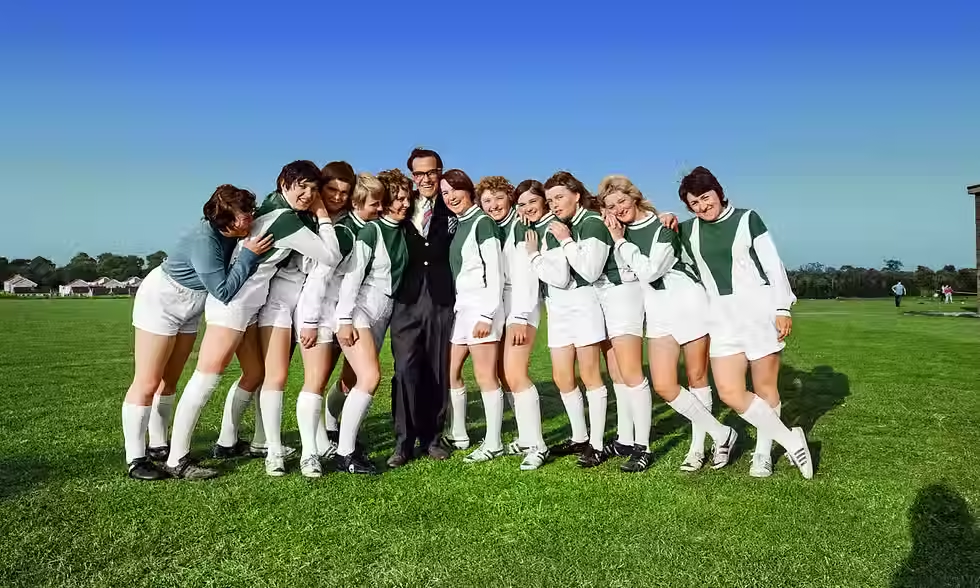
Growth Doesn’t Disappear, It Gets Delayed
For UK fans, Copa 71 hits close to home. The FA had only just lifted its 50-year ban on women playing on affiliated pitches. Women were technically back, but the structures was still fragile. When the Lionesses travelled to Mexico without official backing, it exposed how conditional that freedom really was. England captain Carol Wilson was later fined by the FA for playing. The fine was a quiet reminder that visibility still came with limits. You could participate, but stepping onto a global stage without permission was treated as overstepping.
That history still shapes how women’s football feels today. When visibility has long come with conditions, confidence in taking up space has to be rebuilt. Energy and atmosphere don’t disappear, they develop where people feel free to be seen and heard. What makes this moment exciting is watching that freedom return, driven by fans who are shaping the culture as they go.

Why Copa 71 Still Matters Now
Knowing about Copa 71 changes how we understand the present. Today’s sold-out stadiums and growing fan culture are not sudden breakthroughs. They are a return to something that already existed and was deliberately buried. Women’s football is not finally learning how to be big, it is remembering. The story is finally being reclaimed through the documentary Copa 71, which centres the players and the tournament history tried to forget. Watching it is not just educational. It is political. It restores credit, confidence and context.
Every women’s football fan should know Copa 71 because it proves one essential truth. We had the crowds. We had the noise. We had the culture. What we lost was time and now we are taking it back.


Comments