-3.png)
Union Berlin & Marie-Louise Eta: Breaking History, and What Follows

At 34 years old, Marie-Louise Eta has already done something unprecedented in the world of football; she has become the first woman to manage a men’s team in Europe’s top five leagues.
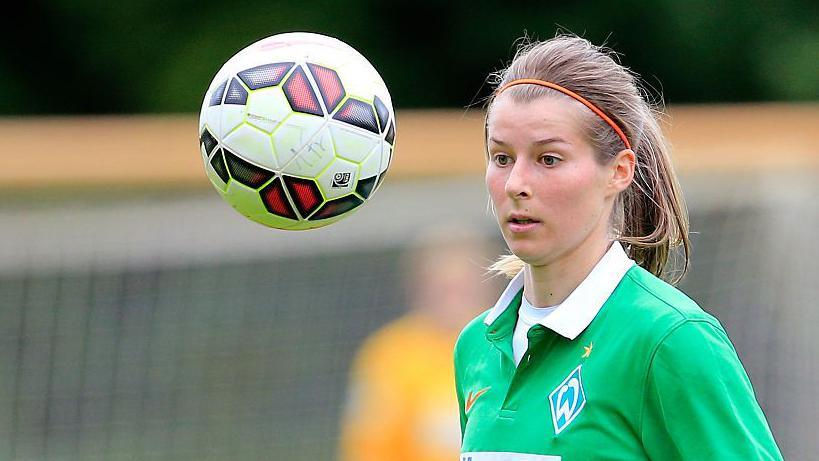
This is not just a singular milestone, but instead a continuation of a career defined by breaking barriers. Eta’s football journey began as a midfielder, with spells across German football including Hamburger SV, BV Cloppenburg, and Werder Bremen. She experienced promotion, relegation, and top-flight football, including Cloppenburg’s rise to the Bundesliga and subsequent relegation after just one season.

Earlier in her career, she was part of a Potsdam setup that dominated German and European football, winning the Bundesliga three times consecutively and the UEFA Women’s Champions League in 2009-10. And although she retired young, at just 26, Marie-Louise stepped into another side of the game.
Her coaching journey has been predominantly historic. In 2023, she became the first woman to serve as assistant coach of a men’s Bundesliga side, working under Marco Grote at Union Berlin. In 2024, she again made history by briefly taking charge of a men’s Bundesliga match during a suspension, being the first woman ever to do so.
Then, to much media attention, on 11 April 2026, following the dismissal of Steffen Baumgart, Eta was appointed interim head coach of Union Berlin’s men’s team. In doing so, she became the first woman to manage a team not only in the Bundesliga, but across Europe’s top five leagues.
Her first match ended in defeat to Wolfsburg, but the performance told a different story. Union posted an xG of 1.79 compared to Wolfsburg’s 0.19, recorded 25 shots to 5, and created three big chances to none. On paper, it was a game that reflected control, chance creation, even if the result didn’t follow.
The Reality Beyond the Pitch
To no surprise, Eta’s appointment was met not only with attention, but with an immediate wave of misogynistic and sexist abuse.
There is a particular psychological weight that comes with watching history unfold when you already understand what follows it. When you belong to a group that is routinely discriminated against, whether through gender, sexuality, race, religion or otherwise, there is often a quiet, anticipatory awareness that achievement will not be received neutrally. That success will be followed, almost inevitably, by scrutiny that is not equally distributed.
In football, that dynamic is especially visible. The sport is built on legacy, competition, and identity, but increasingly, it’s also shaped by online culture where abuse becomes immediate, loud, and disproportionately targeted. It is not that men are exempt from criticism or hate; they are not, but what differentiates cases like Eta’s is the basis of that response is not performance, not tactics, not results, but identity itself.
There is a great contrast between reacting to defeat as a male manager and reacting to defeat as a female manager in a male-dominated space. One is critique, and the other is structural prejudice.
It is difficult, in moments like this, not to experience a dual reaction: celebration at the historic appointment, followed almost immediately by awareness of what will come next, and that’s not because it’s surprising, but because it is predictable.
Club Response & Cultural Shift
Union Berlin has notably taken an unusually direct position in response to online abuse.
Rather than distancing themselves or issuing standard statements, the club have actively confronted hateful commentary online, including responses such as “sincerely, shut the **** up” and “I don’t want this loser on our page.” Albeit unconventional, but it signals a refusal to treat abuse as something to be passively moderated rather than directly challenged.
Platforms such as The Touchline on X have also amplified criticism, with posts framing Eta’s debut in reductive terms. With over 1.5 million followers, the responsibility of these platforms becomes more significant, not only in what is said, but in what is normalised.


Against this backdrop, Union’s public positionality matters. It is not passive allyship, but instead is active defence of not just Eta, but of women in coaching, and of what her appointment represents beyond one club or one match.
The club have also confirmed that Eta’s role is interim, as she is set to transition into the women’s head coach position next season. In their words, retaining her in the men’s role long-term would be a “disservice to women’s football”.
The Bigger Picture
What’s happening with Marie-Louise Eta is about way more than just tactics, it’s about how the system reacts when things actually change. It’s easy to celebrate ‘firsts’ in theory, but when it happens, the backlash is almost instant.

Marie-Louise, alongside Union Berlin, is proving to every young girl and woman that this journey is possible for you - these doors are here to be opened. Union Berlin next play this Friday, against RB Leipzig in what will be a tough fight due to Leipzig's position in the table, being top 3.
But moments like this aren’t just about results, but about shifting what feels possible.


Comments